

Common Trees in the St. Louis Metro East Area
Popular Tree Species in the St. Louis Metro East & Proper Trimming Tips
If you live anywhere in the St. Louis Metro East area, trees aren’t just decoration — they’re part of daily life. They shade homes, cool yards in the summer, and honestly give neighborhoods a lot of their character. Some of these trees have been standing longer than the houses around them.
But here’s the part most homeowners don’t think about until something goes wrong:
Different tree species need different care.
And when trimming is done wrong — or at the wrong time — even a healthy tree can turn into a hazard. We see it all the time. A tree that could’ve lasted another 30 years suddenly splits in a storm because it was poorly maintained.
This guide breaks down the most common trees in the Metro East, what makes them unique, and how to trim them the right way so they stay strong and safe.
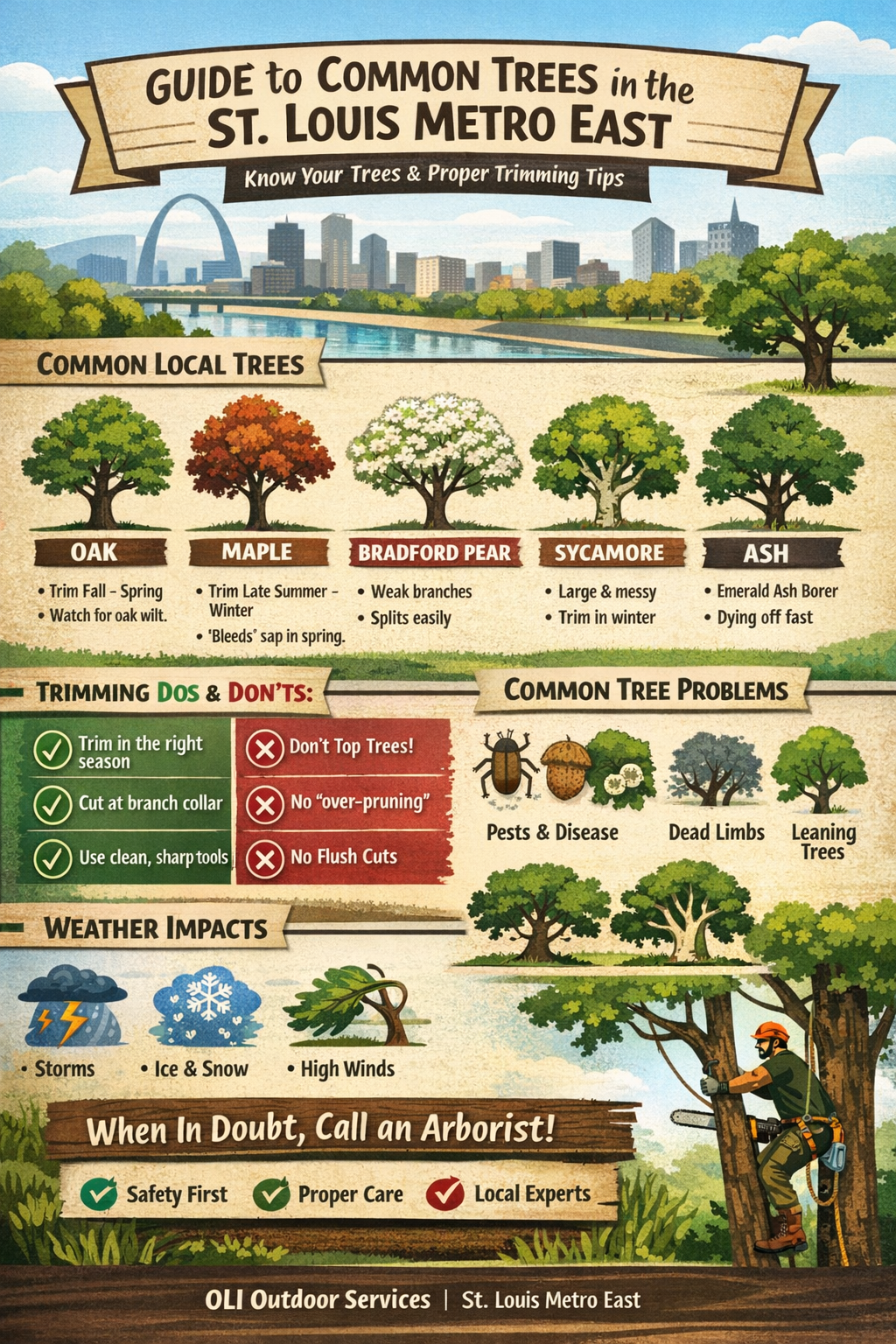
Oak Trees in the Metro East
Why Oak Trees Dominate the Area
Oak trees are some of the most common and longest-living trees in the Metro East. White oak, red oak, and pin oak are everywhere in older neighborhoods.
Facts about oak trees:
- Can live 100–300 years
- Extremely dense and heavy wood
- Strong structure when healthy
- Highly vulnerable to oak wilt disease
Oaks are beautiful trees, but when they fail, they fail hard because of their weight.
Proper Way to Trim Oak Trees
Timing matters more for oaks than almost any other tree.
Oak trees should only be trimmed late fall through early spring when insects are inactive.
Oak Wilt Warning (Critical for Homeowners)
Oak wilt is a fast-moving fungal disease spread by beetles. Trimming during warm months attracts those beetles to fresh cuts. Once infected, a healthy oak can die surprisingly fast.
Proper oak trimming includes:
- Removing dead or diseased limbs
- Thinning crowded branches
- Reducing heavy end weight
- Never topping the tree
Emergency trimming in summer should always include sealing fresh cuts.
Maple Trees in the Metro East
Why Maples Are So Popular
Maples are common in residential areas because they grow fast and provide excellent shade.
Maple tree facts:
- Known for bright fall colors
- Soft wood varieties break easier
- Bleed sap heavily if trimmed in early spring
Best Time and Method to Trim Maples
Maples are best trimmed in:
- Late summer
- Winter dormancy
Avoid early spring trimming when possible. Sap loss doesn’t usually kill the tree, but it stresses it.
Proper maple trimming focuses on:
- Removing crossing branches
- Strengthening branch structure
- Reducing long limbs over roofs
Early structural pruning makes a big difference long term.
Bradford Pear Trees (High Risk Trees)
Why Bradford Pears Cause Problems
Bradford pears were planted heavily years ago because they look nice in spring. The problem is their structure.
Common Bradford pear issues:
- Weak branch angles
- Frequent storm splitting
- Short lifespan
- Rapid, unstable growth
Trimming vs Removal Decisions
You can trim Bradford pears to reduce weight and delay splitting, but trimming won’t fix their genetics.
Proper care includes:
- Removing competing leaders
- Light canopy thinning
- Weight reduction
Many homeowners eventually choose removal after repeated storm damage.
Sycamore Trees
Identifying Sycamores in the Metro East
Sycamores are easy to recognize by their white peeling bark and massive trunks. They’re common near rivers and open spaces.
Sycamore facts:
- Can grow extremely large
- Drop significant debris
- Strong but very heavy
Proper Sycamore Trimming
Sycamores should be trimmed during winter dormancy.
Focus on:
- Removing dead wood
- Providing clearance
- Managing size carefully
These trees usually require professional equipment due to their scale.
Cottonwood Trees
Fast Growth Comes With Tradeoffs
Cottonwoods grow fast, but that speed comes with weak wood and structural issues.
Cottonwood facts:
- Extremely fast growth
- Weak branch attachments
- Frequent storm failures
Cottonwood Maintenance Needs
Regular inspection is critical.
Proper trimming includes:
- Removing cracked limbs
- Reducing heavy branches
- Frequent deadwood cleanup
Neglected cottonwoods often fail during storms.
Ash Trees and Emerald Ash Borer
Impact of Emerald Ash Borer
Ash trees across the Metro East have been heavily damaged by emerald ash borer.
Signs of decline include:
- Thinning canopy
- Dead upper branches
- Bark splitting
What Homeowners Should Do
Once infested, trimming won’t save the tree. Dead ash becomes brittle and dangerous quickly.
Early removal is often safer and more affordable than waiting.
Hickory Trees
Strength and Weight Considerations
Hickories are strong hardwood trees common in rural areas.
Hickory facts:
- Extremely dense wood
- Drop heavy nuts
- Slow growth
Proper Hickory Trimming
Winter trimming is best.
Focus on:
- Clearance over structures
- Monitoring heavy limbs
When hickories fail, the weight can cause major damage.
Elm Trees
Survivors of Dutch Elm Disease
Some elm varieties still exist despite past disease outbreaks.
Proper Elm Care
Elms should only be trimmed during dormancy.
Disease Prevention Tip
Always sterilize cutting tools and remove dead limbs quickly to reduce disease spread.
General Tree Trimming Rules for All Species
Common Homeowner Mistakes
We often see:
- Topping trees
- Over-pruning
- Leaving stubs
- Improper timing
These mistakes weaken trees and create hazards.
Proper Pruning Basics
✔ Never remove more than 25% at once
✔ Cut at the branch collar
✔ Use clean, sharp tools
✔ Trim during appropriate seasons
Good cuts help trees heal correctly.
How Metro East Weather Affects Trees
Storm and Seasonal Stress
The Metro East experiences:
- Strong storms
- Ice accumulation
- Heavy winds
- Flooding
These stresses cause hidden root and limb damage.
Trees should be inspected after major storms even if they look fine.
When to Call a Professional Arborist
Warning Signs to Watch For
Call a professional if you notice:
- Leaning trees
- Trunk cracks
- Dead tops
- Fungal growth
- Root lifting
- Large limbs over structures
Early action prevents emergencies.
Final Thoughts for Metro East Homeowners
Trees are one of the best investments you can have on a property — when they’re cared for properly.
Every species grows differently. Breaks differently. Needs trimmed differently. There’s no universal approach.
If something looks off, don’t ignore it. Trees almost always show warning signs before failure. Most people just don’t know what to look for.
Getting a professional evaluation early is always cheaper and safer than emergency removal later.
FAQ: Tree Care in the St. Louis Metro East
What are the most common trees in the St. Louis Metro East area?
The most common trees in the St. Louis Metro East include oak, maple, Bradford pear, sycamore, cottonwood, ash, hickory, and elm trees. These species grow well in our local soil and climate, but they all require different trimming schedules and maintenance. A local arborist understands how Metro East weather affects these trees and can recommend the right care plan.
When is the best time to trim trees in the St. Louis Metro East?
For most trees in the St. Louis Metro East, late fall through winter is the safest trimming window. Oak trees especially should only be trimmed during dormancy to prevent oak wilt disease. Some species like maples can also be trimmed in late summer. Timing matters a lot — trimming at the wrong time can stress the tree or invite pests.
Do I need a professional arborist to trim my trees in the Metro East?
Small pruning jobs can sometimes be handled by homeowners, but large limbs or trees near homes should always be inspected by a professional arborist. Tree trimming in the St. Louis Metro East often involves storm-damaged limbs, tall mature trees, and heavy hardwood species that require specialized equipment and safety training.
How often should trees be inspected in the St. Louis Metro East?
Trees should be professionally inspected at least once every 1–2 years, and always after major storms. The Metro East experiences strong winds, ice, and heavy rain that can weaken tree structure. Regular inspections help catch problems early before they turn into emergency removals.
Which trees are most likely to fail during storms in the Metro East?
Bradford pear, cottonwood, and untreated ash trees are among the most likely to fail during storms in the St. Louis Metro East. These species tend to have weak wood or structural issues. A professional arborist can identify high-risk trees and recommend trimming or removal before severe weather hits.
What is oak wilt and why is it a concern in the Metro East?
Oak wilt is a fungal disease that kills oak trees and spreads through insects attracted to fresh cuts. It’s a serious concern in the St. Louis Metro East. Trimming oak trees during warm months increases the risk of infection. That’s why oak trimming should only be done in late fall or winter.
Can trimming a tree make it safer during storms?
Yes. Proper trimming reduces excess weight, removes weak limbs, and improves structural balance. In the Metro East, preventative pruning is one of the best ways to reduce storm damage risk. Trees that are regularly maintained are far less likely to fail during high winds.
SHARE POST
SEARCH ARTICLE
Recent Insights